Choosing premises
How to assess a restaurant premises
The AvantBail team, Engineering & design office · 06/25/2026 · 4 min
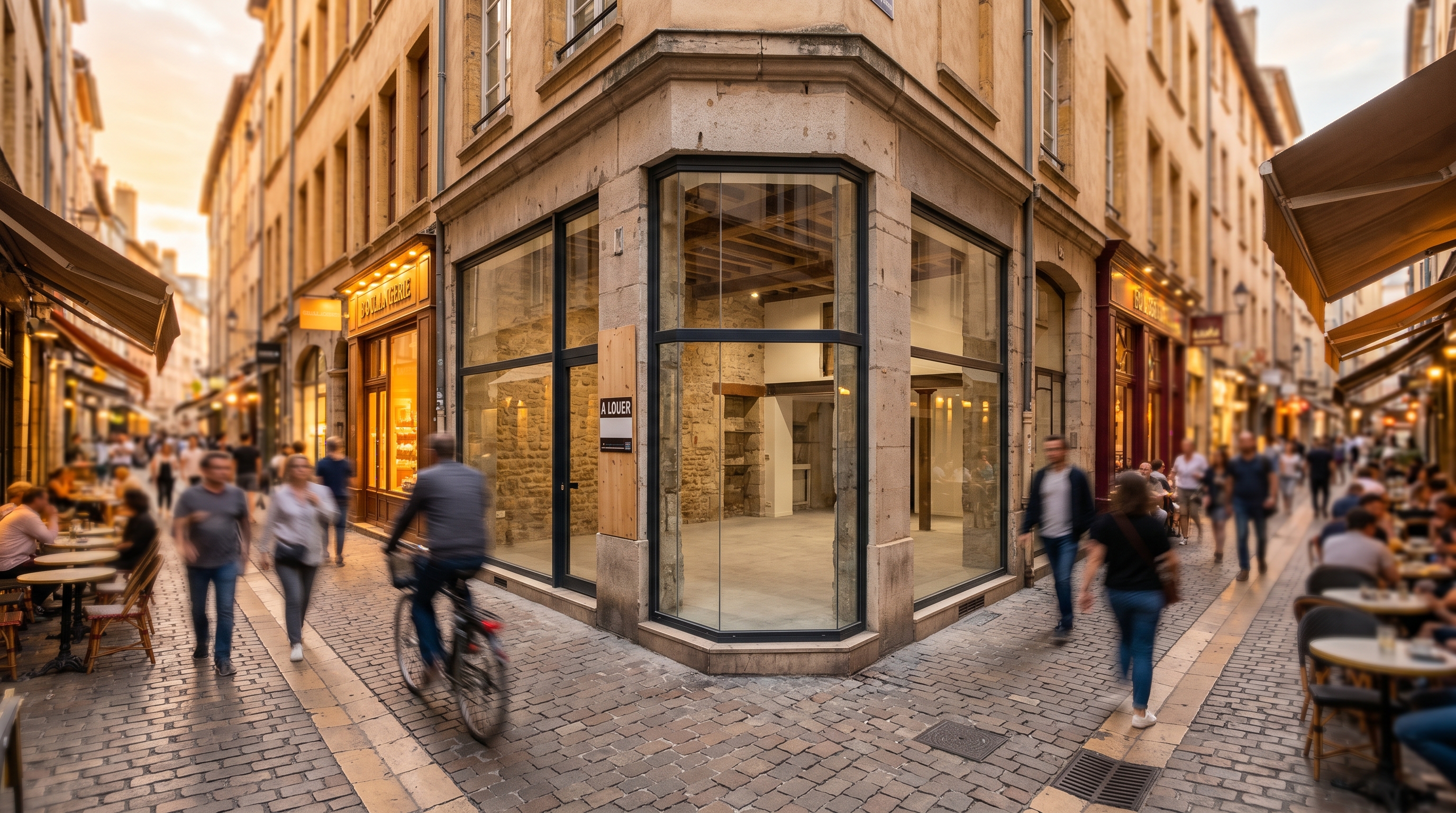
The first signals to read before committing to an address.
Before signing, a few simple habits help you spot what can make or break a restaurant project. The point isn't to settle everything on your own, but to arrive prepared: knowing what is confirmed from the outset, what is probable, and what still needs to be verified on-site with the right professionals. Here is a general reading grid, from the regulatory framework through to commercial viability.
Looking at zoning and destination
Not every address allows food service. The local urban plan (plan local d'urbanisme, or PLU — the municipal land-use plan) can restrict certain activities depending on the zone, and moving from an office or retail unit to a restaurant sometimes requires a changement de destination (a change of the premises' regulatory use category).
In several major cities (Paris, Lyon, Bordeaux, and others), you also need to distinguish the changement de destination in the planning sense from the changement d'usage (change of use), which falls under the municipality and mainly concerns ground-floor residential premises. The two regimes can apply cumulatively.
This is one of the very first points to check: it determines whether the project is feasible at all, before any question of fit-out or budget.
Understanding the history of the premises
A local commercial (commercial premises) that has already housed a restaurant often makes the process easier: an extraction (fume-exhaust) duct already in place, equipment present, prior use of the activity, and sometimes a licence or a fonds de commerce (the going-concern business assets and goodwill) taken over. Conversely, premises with no restaurant history call for more checks.
The activity code of a business already present at the address (for example, traditional restaurant service) is a useful signal, but it is only a signal: a national database can be incomplete or lag behind in time. The absence of a prior restaurant is not a deal-breaker; it simply changes the list of points to study.
Spotting technical constraints
Fume extraction (extraction), ventilation, accessibility for people with reduced mobility (PMR), and ERP (établissement recevant du public — public-access building) classification based on capacity: these factors weigh on the budget and the timeline. A careful visit, backed by a professional's opinion, helps you anticipate them rather than discover them once the bail commercial (commercial lease) is signed.
The higher the capacity, the greater the safety obligations (ERP category, possible review by a safety commission). It is best to gauge this level of requirement right from the visit.
Assessing the condition of the building and the works
Beyond aesthetics, the goal is to judge what bringing the premises up to standard will cost: electrical supply and available power, plumbing and drainage, ventilation, sound insulation from neighbouring dwellings, and the state of the floors and networks.
Some items are barely visible but decisive. Ask whether the electrical power and any gas supply are sufficient for a professional kitchen: an upgrade can take time and weigh heavily on the budget.
Placing the commercial environment
Viability is not just about regulatory feasibility. Foot traffic at the hours that matter, direct competition, how well neighbouring businesses complement each other, parking and public-transport access are all signals for comparing several addresses.
Many of these elements can't be automated: façade visibility, the feasibility of a terrace, and the rhythm of the neighbourhood by hour and by day are observed on-site. Note them methodically, address by address.
Anticipating the budget and the timeline
A restaurant project chains together several steps: planning and building permits, ERP and accessibility compliance, hygiene declarations, and a possible alcohol-sales licence. Each has its own lead time.
Thinking in sequence (what must be obtained before what) avoids nasty surprises. A realistic timeline, even an approximate one, beats an optimistic opening date set too early.
Surrounding yourself with the right professionals
Depending on the scale of the project, an architect or project manager, an inspection office (bureau de contrôle), a chartered accountant, and a lawyer bring a perspective that upfront analysis cannot replace. The goal of an initial reading is to arrive at these discussions with the right questions.
A clear reading grid — what is confirmed, what is probable, what still needs to be verified — is precisely what lets you target expertise where it is most useful.
How AvantBail can help you
Assessing premises means cross-checking many signals — zoning, history, technical, commercial. That is exactly what AvantBail brings together for you in a single pre-diagnostic.
AvantBail produces the feasibility pre-diagnostic for your premises: what can be confirmed automatically (zoning, activity history at the address), what is probable, and what still needs to be verified on-site. You walk away with a clear reading of the points to dig into and the list of authorizations to plan for, before you commit.
And if you want to go further, our team supports you from diagnosis through to opening: choosing the premises, designing the kitchen, and handling regulatory files.
Start your pre-diagnostic today at avantbail.fr — or request a call back to discuss it with an expert.
Informative and general content: it does not constitute legal, financial, or regulatory advice. Rules vary by municipality, by building, and by your project. Always have your situation validated by the relevant professionals (architect, inspection office, lawyer, chartered accountant, town hall).
How AvantBail can help
A location in mind? Document it before you commit.
Start with the free pre-diagnostic to place the address in a few minutes. To go further — every point checked, sources included, before you sign — the full AvantBail report documents every step.