

Examples
What a documented decision looks like.
Before signing, it is hard to know what an address is really hiding. These fictional examples show how a report structures the decision: what is confirmed, what is likely, what remains to verify — and what it leads to.
Demonstration
Types of examples shown.
All examples below are fictional and anonymised. They match no client and no real address.
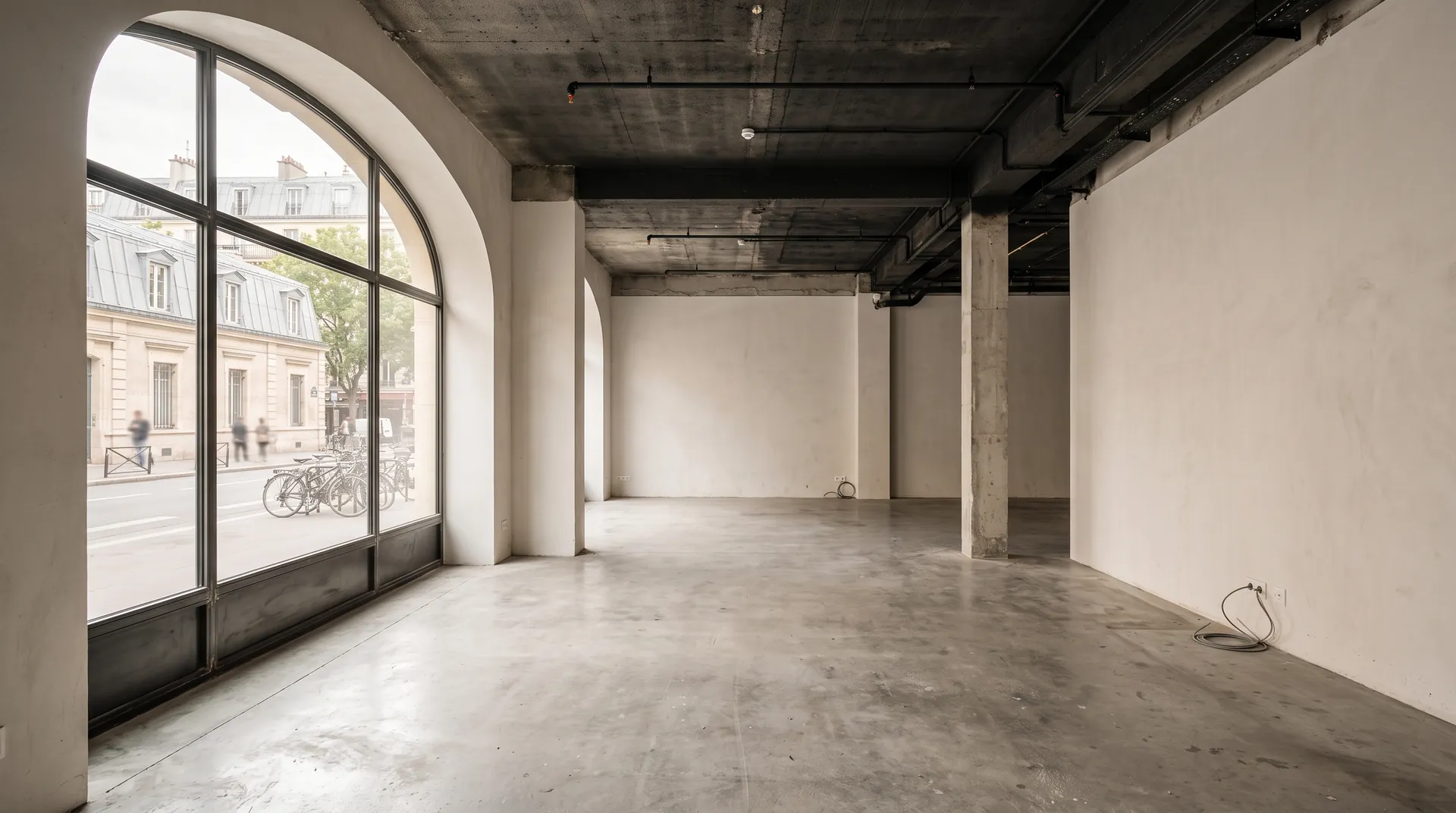
Fictional example — city-centre unit
Demonstration: an address with favourable zoning but extraction to verify.
Fictional example — former shop
Demonstration: a unit with no restaurant history, change of use to study.
Fictional example — ground-floor unit
Demonstration: a co-ownership whose rules condition several technical points.
Report extract (fictional example).
Fictional example — not QA validatedEvery line carries a status and a source. Fictional data, for demonstration only.
Confirmés
Probables
À vérifier
Three possible outcomes
A decision, not just an assessment.
From the same elements, a report points to a clear outcome. Fictional examples.
Favourable
Demonstration: confirmed zoning, restaurant history, feasible extraction. The address is worth pursuing.
Conditional
Demonstration: genuine feasibility, but pending specific points — co-ownership rules, extraction approval.
Unfavourable
Demonstration: a blocking point found early, sparing a costly commitment on the wrong address.
And for your address?
Get a report on your own unit: confirmed, likely, to verify — and the decision it leads to.